
How ERP Technology Is Transforming Beef Export Compliance and Traceability
The global beef export industry runs on trust. Buyers in the Middle East, Europe, and Asia don't just want quality meat — they want documented proof of where it came from, how it was handled, and whether it meets their country's regulatory standards. For beef exporters, staying compliant across multiple jurisdictions while managing cold chain logistics, halal certifications, and government audits has become a full-time challenge on its own. This is exactly where a purpose-built ERP system changes the game.
Government Audits & Inspections
Every beef exporter knows the stress of an unannounced government audit. Missing paperwork, inconsistent batch records, or delayed documentation can halt shipments and damage relationships with international buyers. A modern ERP system centralizes every inspection report, veterinary certificate, and compliance document in one searchable system. When auditors from FSSAI, USDA, or EU food safety authorities request records, exporters can retrieve complete documentation in minutes instead of days — turning what used to be a scramble into a routine formality.
Complete Animal Traceability
Traceability isn't optional anymore — it's the baseline expectation. Buyers and regulators want to trace a shipment all the way back to the source farm, the specific animal batch, slaughter date, and processing facility. ERP-driven traceability systems tag every unit of meat with a unique identifier that follows it through slaughter, processing, cold storage, and shipping. If a recall or quality concern ever arises, exporters can isolate the exact batch affected within minutes, rather than pulling entire shipments off shelves. This level of granular tracking also builds long-term trust with international buyers who increasingly demand farm-to-port visibility.
Strict Export Compliance
Each importing country has its own rulebook — different labelling requirements, documentation formats, and certification standards. An ERP system built for export compliance automatically maps shipment documentation to the destination country's specific requirements, flagging missing certificates before the container ever leaves the warehouse. This reduces the risk of shipments being rejected at customs, which can be enormously costly both financially and reputationally
Cold Chain Monitoring
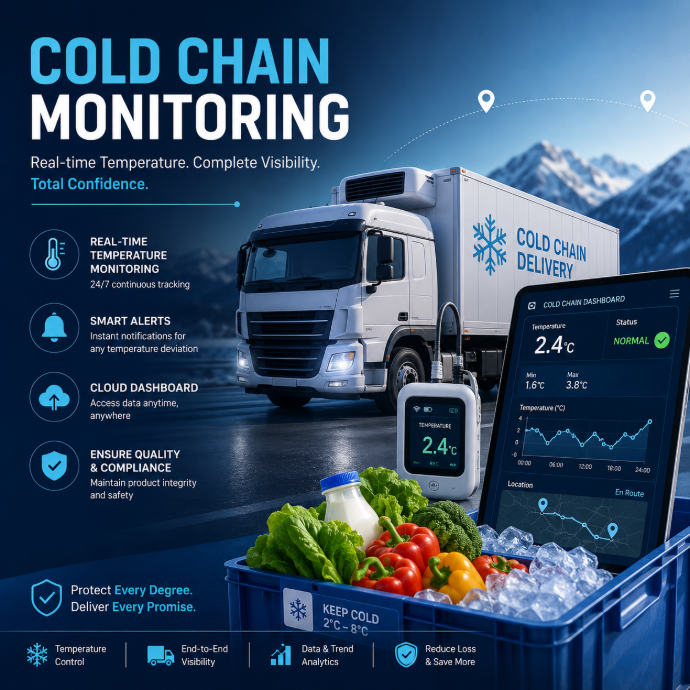
Beef is only as good as the temperature it's stored at. A single break in the cold chain — during storage, loading, or transit — can compromise an entire shipment. ERP systems integrated with IoT temperature sensors give exporters real-time visibility into cold storage and refrigerated transport conditions. Automated alerts flag temperature deviations instantly, allowing corrective action before spoilage occurs, and every temperature log becomes part of the permanent compliance record for that shipment.
Halal Certification Management
For exporters serving Middle Eastern and Southeast Asian markets, halal certification isn't a formality — it's a business requirement. Managing certification renewals, documenting halal slaughter procedures, and ensuring segregation of halal and non-halal processing lines requires careful record-keeping. ERP systems can track certification expiry dates, automate renewal reminders, and maintain digital audit trails proving halal compliance at every stage of processing — protecting exporters from the reputational and financial damage of a certification lapse.
Data Security & Business Continuity
Export documentation, buyer contracts, and compliance records represent years of business-critical data. Losing access to this information — whether through a system failure, cyberattack, or natural disaster — can be catastrophic. Cloud-based ERP systems with automated backups and role-based access control ensure sensitive data stays protected while remaining instantly recoverable. Business continuity planning built into the ERP means operations can resume quickly even after unexpected disruptions.
The Bottom Line
Beef export is a high-stakes business where a single compliance gap can mean rejected shipments, lost contracts, or regulatory penalties. An ERP system tailored to the meat export industry doesn't just digitize paperwork — it builds a foundation of traceability, accountability, and speed that lets exporters respond to audits, buyer demands, and regulatory changes with confidence. In an industry where trust is the real currency, technology that proves compliance at every step isn't a luxury. It's the cost of doing business globally.