
Odoo CRM: Complete Guide to Customer Relationship Management for Growing Businesses
Managing customer relationships effectively is one of the biggest challenges businesses face today. Sales teams juggle spreadsheets, scattered emails, and disconnected tools, often losing track of valuable leads and missing opportunities to close deals. This is where Odoo CRM steps in as a powerful, all-in-one solution that transforms how businesses manage their sales pipeline and customer interactions.
WHAT IS ODOO CRM?
Odoo CRM is a customer relationship management module within the larger Odoo ERP ecosystem. Unlike standalone CRM tools, Odoo CRM is deeply integrated with other business functions such as sales, inventory, accounting, and marketing. This integration means that data flows seamlessly across departments, eliminating the need for manual data entry and reducing the risk of errors.
At its core, Odoo CRM helps businesses track leads from the moment of first contact all the way through to closing a deal, and even beyond into after-sales support. It provides a centralized platform where sales teams can manage contacts, opportunities, meetings, and follow-ups without switching between multiple applications.
KEY FEATURES OF ODOO CRM
- Lead and Opportunity Management
Odoo CRM allows businesses to capture leads from multiple sources including website forms, emails, phone calls, and even social media. Once captured, leads can be automatically assigned to sales representatives based on predefined rules, ensuring no potential customer falls through the cracks. - Visual Sales Pipeline
One of the standout features is the Kanban-style pipeline view. Sales teams can drag and drop opportunities through different stages such as New, Qualified, Proposal, and Won. This visual approach makes it easy to see exactly where each deal stands and what needs attention. - Activity Scheduling and Reminders
Odoo CRM enables sales representatives to schedule calls, meetings, and follow-up tasks directly within the platform. Automated reminders ensure that no important customer interaction is forgotten, improving response times and customer satisfaction. - Email Integration
The CRM integrates directly with email, allowing sales teams to send and receive emails without leaving the platform. Every email exchange gets automatically logged against the relevant customer record, creating a complete communication history. - Sales Forecasting and Reporting
With built-in analytics and reporting tools, businesses can generate detailed insights into sales performance, conversion rates, and revenue forecasts. These reports help management make data-driven decisions rather than relying on guesswork. - Customization and Automation
Odoo CRM is highly customizable. Businesses can create custom fields, automate repetitive tasks using workflows, and set up rules for lead scoring and assignment based on their specific sales processes.
WHY BUSINESSES CHOOSE ODOO CRM
Seamless ERP Integration
Since Odoo CRM is part of the broader Odoo ecosystem, it connects effortlessly with other modules like Sales, Inventory, and Accounting. When a deal is won in the CRM, it can automatically trigger a sales order, update inventory levels, and generate an invoice, all without manual intervention.
Cost-Effective Solution
Compared to many standalone CRM platforms that charge per user with expensive add-ons, Odoo CRM offers a more affordable pricing structure, especially valuable for small and medium-sized businesses looking to scale without breaking their budget.
Mobile Accessibility
Sales teams are often on the move, meeting clients and attending events. Odoo CRM offers a mobile app that allows representatives to access customer data, update opportunities, and log activities from anywhere.
User-Friendly Interface
Odoo is known for its clean and intuitive interface. Even team members without extensive technical training can quickly learn to navigate the CRM, reducing onboarding time and increasing adoption rates
IMPLEMENTATION CONSIDERATIONS
While Odoo CRM offers extensive out-of-the-box functionality, businesses often benefit from working with an experienced implementation partner to customize the system according to their unique sales processes. This includes configuring pipeline stages, setting up automated workflows, integrating with existing communication channels, and training staff to maximize adoption.
A well-planned implementation ensures that the CRM aligns with actual business workflows rather than forcing teams to adapt to a generic system. This is where proper consultation and configuration make a significant difference in the long-term success of the CRM deployment.
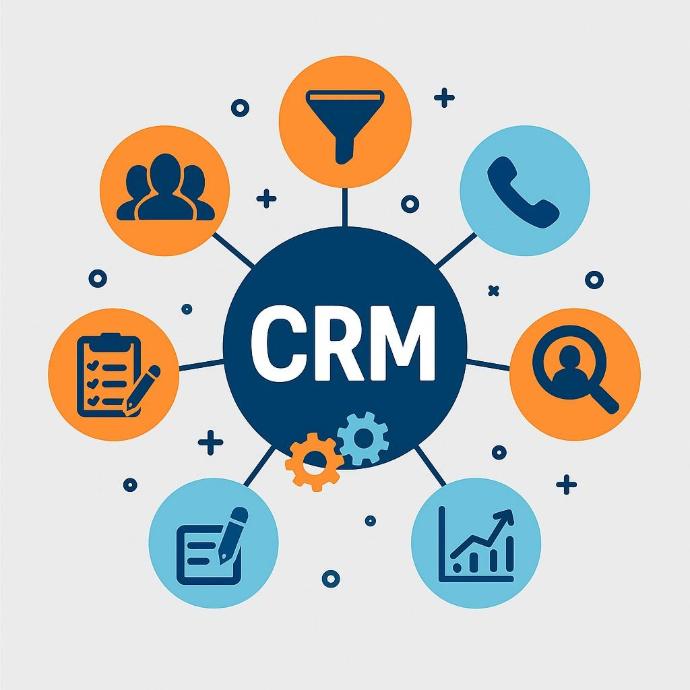
CONCLUSION
Odoo CRM is more than just a tool for tracking contacts. It is a comprehensive platform that streamlines the entire sales process, from lead generation to deal closure and beyond. Its deep integration with other Odoo modules, combined with its affordability and ease of use, makes it an attractive choice for businesses of all sizes looking to improve their customer relationship management.
For companies aiming to boost sales productivity, improve customer engagement, and gain better visibility into their sales pipeline, Odoo CRM provides the tools needed to achieve these goals efficiently and cost-effectively.