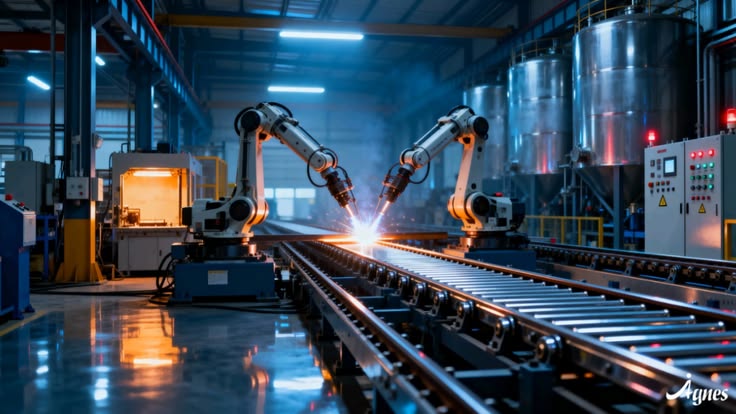
In the metal manufacturing industry, we often focus our optimization efforts on the shop floor. We invest heavily in CNC machinery, robotic welders, and plasma cutters. We scrutinize melting points, tensile strengths, and alloy compositions. While this focus on production is necessary, it often leads us to overlook a critical area that directly impacts our bottom line: Gate Operations.
If you run a metal manufacturing business, "Gate Operations" means far more than a security booth and a parking lot. It is the strategic control point where physical materials, data, and logistics converge. It is the bridge between your suppliers and your production line, and between your finished goods and your customers. When gate operations are inefficient, your entire manufacturing process suffers from delays, inventory bloat, and wasted labor.
In this blog, we will break down what Gate Operations truly mean for a metal fabricator and why streamlining this area is the quickest way to increase your profitability without buying a single new machine.
The Hidden Bottleneck in Your Factory
In the metal manufacturing industry, we pour millions into CNC machinery, robotic welders, and plasma cutters. We scrutinize melting points and tensile strengths obsessively. Yet, we often neglect the very gateway through which all our materials and products must pass.
If you run a metal fabrication business, "Gate Operations" means far more than a security booth. It is the strategic control point where physical materials, data, and logistics converge. It is the bridge between your suppliers and your production line. When this area is inefficient, your entire process suffers from delays, inventory bloat, and wasted labor.
The Hidden Bottleneck in Your Factory
In the metal manufacturing industry, we pour millions into CNC machinery, robotic welders, and plasma cutters. We scrutinize melting points and tensile strengths obsessively. Yet, we often neglect the very gateway through which all our materials and products must pass. If you run a metal fabrication business, "Gate Operations" means far more than a security booth. It is the strategic control point where physical materials, data, and logistics converge. It is the bridge between your suppliers and your production line. When this area is inefficient, your entire process suffers from delays, inventory bloat, and wasted labor. The good news is that fixing your gate operations doesn't require expensive new machinery—it requires a shift in focus and the right processes.
The Hidden Costs of a "Broken" Gate
Why should you invest time and capital into a loading dock and a weighbridge? Because the costs of negligence are staggering:
Demurrage & Detention Fees: If your trucks are waiting for hours to unload because of poor scheduling or a broken forklift, your shipping partners will bill you for the wait time. These fees add up quickly and eat directly into your margins.
Inventory Shrinkage: Without proper weighbridge integration, you might be paying for 20 tons of steel but only receiving 19.5. Over a year, that half-ton loss destroys your margin. You are essentially paying for material you never received.
Labor Silos: Do you have a forklift driver sitting idle because the paperwork isn't ready? Does a QC inspector have to run across the yard to check a delivery? Gate inefficiency steals labor hours from productive tasks and turns them into walking or waiting time. This is wasted wages.
The "Rework" Trap: Suppose a batch of cold-rolled steel arrives with an oily residue that wasn't specified. If the gate inspector misses this, the oil contaminates the laser cutter, ruining the cutting lens and causing scrapped parts later. The cost of that rework is directly attributable to poor intake procedures.
Customer Dissatisfaction: If outbound shipments are delayed because of gate inefficiencies, your customers lose trust in your reliability. In a competitive industry, this can cost you repeat business.
Technology Integration: The Modern Metal Yard
To transform your Gate Operations from a bottleneck into a competitive advantage, you need to move beyond clipboards and checklists. In 2026, technology is the great equalizer. The digital weighbridge is a game-changer. Instead of manually writing down weights, integrate your weighbridge with your ERP. When a truck enters, the weight is automatically logged. When it leaves, the tare weight calculates the net steel received, and the inventory is updated in real-time. This eliminates human error and ensures you only pay for what you actually receive.
Mobile scanning is another critical tool. Equip your gate staff with rugged handheld scanners. They can scan barcodes on the material to instantly pull up the purchase order, verify the heat number (critical for metal traceability), and mark the receipt complete. This reduces paperwork, eliminates manual data entry errors, and speeds up the entire receiving process significantly.
Appointment scheduling systems are equally important. Implement a digital slot-booking system for hauliers. This spaces out truck arrivals, preventing congestion in the yard. You know exactly when materials are arriving, allowing you to preposition forklifts and labor, reducing the "dock-to-stock" time dramatically. No more unexpected truck surges that overwhelm your staff.
Finally, while still emerging, AI-powered cameras at the gate can visually inspect for surface defects in steel or major dents on the packaging. This technology alerts the operator to a potential claim before the driver even leaves, saving you from disputes and losses later.
The "Golden Hour" of Shipping
For outbound operations, the last hour before the shipping cutoff is often chaotic. This is where you lose the most money. The goal is dock-to-stock for inbound and order-to-ship for outbound, measured in minutes, not hours. When an order for fabricated parts is ready, the Gate Operations team must know exactly where it is stored. Is it on the mezzanine? In the finished goods yard? By using a Warehouse Management System integrated with the gate, the picker knows exactly which bay to go to. This eliminates the "searching for the part" time, ensuring the truck is loaded and on the road before the driver hits their Hours of Service limit.
Safety and Compliance: The Gate Guard
Finally, we cannot ignore safety. Metal manufacturing involves high-risk loads. Your Gate Operations are your first line of defense against OSHA violations. Verifying that inbound coils are chocked properly and outbound fabrications are welded to skids or heavily strapped prevents accidents on the highway. Additionally, if you ship items with cutting fluids or oils, the paperwork at the gate must flag this for the driver with proper Hazmat placards. A safety failure at the gate can lead to fines, lawsuits, and reputational damage.
Conclusion
In the competitive world of metal manufacturing, where margins are thin and raw material costs are volatile, you need to find efficiency in every corner of the business. The "Gate" isn't just an entrance; it is a strategic control point that dictates the rhythm of your entire factory. By investing in digital weighbridges, mobile scanning, and rigorous staff training, you can turn your gate into a profit center. You stop paying for material you don't receive, you stop paying overtime for trucks waiting to load, and you build a reputation for reliability with your customers because your shipments leave on time.